














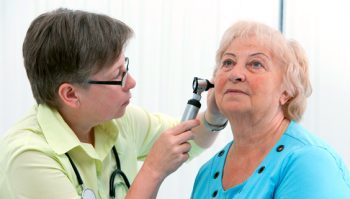
 Our healthcare and business law firm works with numerous medical practices in compliance and regulatory matters. Many medical practices are unaware of the requirements of the Americans With Disabilities Act (“ADA”), and in particular the requirements to accommodate individuals with auditory disabilities (including individuals who are deaf or hard of hearing). The ADA does not just prevent disability discrimination by employers. Title III of the ADA applies to “public accommodations.” A public accommodation is a business that is open to the public or provides goods or services to the public and specifically includes a “professional office of a health care provider.” 28 CFR 36.104; Guide to Disability Rights Law, ada.gov. This post provides an overview of the ADA’s auxiliary aids and services requirements and how they apply to medical Practices. If you have questions regarding this blog post or would like to speak with counsel regarding your medical practice, you may contact us at (404) 685-1662 (Atlanta) or (706) 722-7886 (Augusta), or by email, info@littlehealthlaw.com. You may also learn more about our law firm by visiting www.littlehealthlaw.com.
- Medical Practices Must Take Proactive Steps in Certain Situations
The general auxiliary acts and services rule applicable to medical practices is: “No individual shall be discriminated against on the basis of disability in the full and equal enjoyment of the goods, services, facilities, privileges, advantages, or accommodations of any place of public accommodation by any private entity who owns, leases (or leases to), or operates a place of public accommodation.” 28 C.F.R. 36.201. As related to auxiliary aids or services, full and equal enjoyment means (a) a patient cannot be refused access because of his/her disability, (b) effective communication modalities (i.e., auxiliary aids or services) are required, and (c) when necessary to accommodate a patient’s needs, the practice must reasonably modify policies, physical space, and procedures. 28 C.F.R. Part 36. Continue reading ›
 Our healthcare and business law firm works with many providers and other allied health professionals who are beginning their journeys of opening a Medical Spa. Medical Spas have been
  At the beginning of COVID-19, telemedicine rules were softened on the state and federal level. In a
  Our healthcare and business law firm works with many behavioral health providers in establishing and operating their ABA associated businesses. We have a particular focus on such companies and will be producing a series of helpful articles to assist providers in navigating various operational and business hurdles to ensure they are able to effectively treat their patients.
 At the beginning of COVID-19, telemedicine rules were softened on the state and federal level. In a
  As a healthcare and business law firm, many of our clients come to us with questions relating to the proper ordering and management of controlled substances. As such, we wanted to take this opportunity to point out a recent update to the DEA’s Practitioner’s Manual.
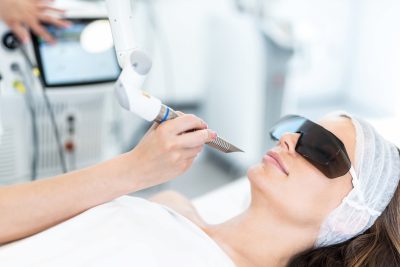 Our healthcare and business law firm works with many providers and other allied health professionals who are beginning their journeys of opening a Medical Spa. Medical Spa’s have been
  Our healthcare and business law firm works with many physicians in Georgia who are facing mental health and substance abuse difficulties. Sometimes those difficulties bleed into work and can cause work and/or licensure issues. Georgia offers an incredible resource dedicated to physician recovery in a way that protects Georgia citizens and minimizes career concerns for the physician—the Georgia Professional Health Program (“PHP”). This post provides 3 Facts about the Georgia PHP. If you are experiencing or are concerned about ramifications of a potential addiction or mental health disorder, in addition to seeking medical help, we recommend contacting an experienced attorney who can assist you through this difficult process and help minimize potential licensure and career impacts. If you have questions regarding this blog post or would like to speak with counsel regarding
  As a healthcare and business law firm, we have many clients who participate in or wish to participate in pain management clinics. A previous blog post of ours provided an
  Our healthcare and business law firm works with many providers and other allied health professionals apply for and obtain licensure in Georgia. Holistic medicine has grown in popularity and accessibility, which has led to an increase in functional medicine practices around the country. Relatedly, the practice of naturopathy also appeals to many consumers. The question we are periodically asked is whether Georgia allows naturopathy practitioners to practice naturopathy in Georgia. The post provides a general overview of the answer to that question. If you have questions regarding this blog post or would like to speak with counsel regarding